- Staff Editor
- Follow Me
- June 3, 2026
-
They are the most connected, most values-driven, and most misunderstood generation in the modern workforce. Companies that refuse to adapt are already paying the price
They grew up with a smartphone in their hand, lived through a global pandemic during their formative years, and entered a job market shaped by economic uncertainty and rapid technological change. Generation Z, broadly defined as those born between 1997 and 2012 is now a significant and growing presence in workplaces around the world. By 2025, they make up roughly 27 percent of the global workforce. By 2030, that share will be closer to one in three workers.
Yet many companies are still managing Gen Z the same way they managed millennials a decade ago. That is a mistake. This generation has distinct expectations, different priorities, and a much lower tolerance for workplaces that fail to meet them. Understanding what they want and why is no longer optional for employers serious about attracting and keeping talent.
Who exactly is Generation Z?
To understand what Gen Z wants from work, it helps to understand the world they grew up in. They are the first generation to have never known life without the internet. Social media, instant communication, and access to global information are not novelties to them — they are simply how the world works.
They came of age during a period of significant instability: a global financial crisis, rising mental health awareness, climate anxiety, and a pandemic that disrupted their education and early careers. These experiences have shaped a generation that is pragmatic, socially conscious, and deeply skeptical of institutions that do not walk their talk.
Unlike millennials, who were often accused of chasing passion over practicality, Gen Z tends to be more financially cautious. They want stable income and clear career progression. But they also want work that feels meaningful, managers who treat them like human beings, and employers whose values match their own.
Gen Z does not separate who they are from what they do. Work is not just a paycheck, it is an extension of identity, values, and purpose.
What they actually expect from employers
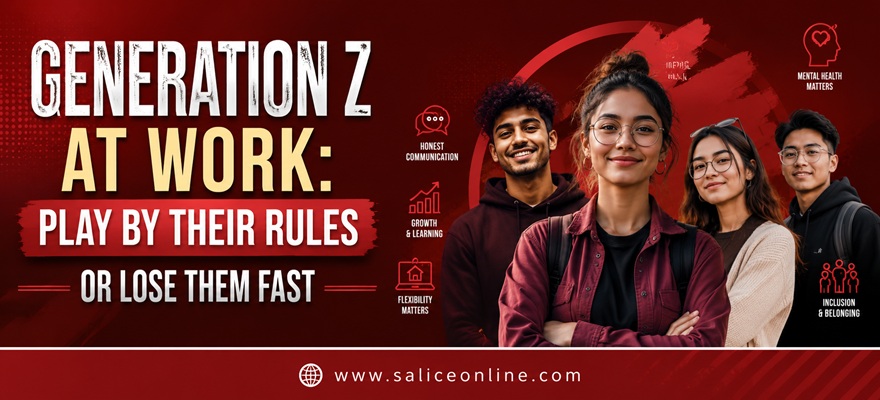
Following are the six core expectations that define what Generation Z looks for in a workplace. Together, they paint a clear picture of what companies must offer to compete for this talent.
Mental health and wellbeing support
Gen Z openly discusses mental health and expects employers to take it seriously not with token wellness apps, but with real policies, flexible time off, and a culture that does not punish vulnerability.
Authentic values and social purpose
Sustainability, diversity, ethics, and community impact matter deeply. Gen Z researches companies before applying and will walk away from employers whose actions contradict their stated values.
Honest, frequent communication
They want regular feedback, not just an annual review. They also want to be heard not managed from the top down. Transparent communication from leadership builds trust quickly.
Clear growth and learning paths
They want to know where a role is going. Structured development, mentoring, and the chance to build new skills are powerful retention tools. Stagnation is one of the top reasons they leave.
Flexibility and work-life balance
Hybrid and flexible working is not a perk for Gen Z, it is a baseline expectation. Rigid nine-to-five office mandates with no justification are a fast path to losing them.
Inclusion and belonging
Gen Z is the most diverse generation in history. They expect workplaces where different backgrounds, identities, and perspectives are genuinely welcomed, not just represented on a diversity slide.
The management gap that is costing companies
One of the most common complaints from Gen Z employees is the quality of management. Many entered the workforce under managers trained in a different era, one where hierarchy was clear, feedback was infrequent, and emotional conversations stayed outside the office door. That model does not work for this generation.
Gen Z wants managers who act more like coaches than bosses. They want regular check-ins, honest conversations about performance, and a genuine interest in their development as people, not just as employees. Companies that invest in training managers to lead in this way see measurable improvements in Gen Z retention and engagement.
The reverse is also true. Poor management is consistently cited as the primary reason Gen Z workers leave a role. Not low pay. Not long hours. Bad managers. This means that companies spending heavily on employer branding while neglecting people leadership are addressing the wrong problem.
Technology expectations and where companies fall short
Gen Z has grown up using best-in-class consumer technology. Intuitive apps, instant responses, and seamless digital experiences are the norm for them outside of work. When they arrive at a job and find themselves using clunky legacy systems, excessive email chains, and slow manual processes, the frustration is immediate.
This does not mean companies need to rebuild their entire tech stack. It means they need to take seriously how outdated tools affect the daily experience of their youngest employees and involve Gen Z voices in decisions about the digital workplace. Being asked to contribute to solutions is itself a form of respect they respond well to.
Five things companies can do right now
- Audit your manager training — leadership style matters more than compensation to Gen Z
- Create visible career development plans with clear milestones from day one
- Offer genuine flexibility, not just a policy on paper that carries a social cost to use
- Review your mental health benefits and ensure they are accessible and stigma-free
- Let Gen Z employees see how their work connects to the organisation’s broader purpose
Why the cost of ignoring this is higher than you think
Some business leaders still treat Gen Z’s expectations as entitlement. That is a costly misreading. The average cost of replacing a single employee accounting for recruitment, onboarding, and lost productivity is estimated at between one and two times their annual salary. For companies with high Gen Z turnover, this adds up to a significant and entirely avoidable expense.
There is also a talent scarcity argument. As baby boomers continue to retire and millennials move into senior roles, Gen Z will increasingly fill the operational backbone of most organisations. Companies that build a reputation as a good place for young talent to grow will have a meaningful advantage in attracting the best of this generation. Those that do not will find themselves in a costly and permanent recruitment cycle.
The opportunity hiding inside the challenge
It is easy to frame the Gen Z conversation as a list of demands companies must comply with. But there is a more optimistic way to read it. This is a generation that brings digital fluency, creative problem-solving, a global mindset, and a genuine desire to do meaningful work. Companies that build environments where those qualities can thrive stand to benefit enormously.
The organisations winning with Gen Z are not those doing the bare minimum. They are the ones that have genuinely rethought what a good workplace looks like — and found that the changes they made also made things better for every other generation of employee too.
Generation Z is not asking for the impossible. They are asking for honesty, respect, growth, and purpose. The companies that can offer that, sincerely and consistently, will not just retain this generation. They will be built to last.