- Staff Editor
- Follow Me
- October 19, 2026
-
We often judge a product by what it can do on the day we buy it. We compare performance, appearance, features, and price. We spend less time asking whether we can replace its battery, repair its screen, or keep using it when the manufacturer stops providing software support.
Those questions matter because every replacement demands more materials, manufacturing, packaging, and transport. When a small fault ends the life of an otherwise useful product, we lose more than the money we spent. We also waste resources that manufacturers have already extracted and processed.
Repairable hardware, modular design, and software updates offer another path. They can help products adapt as components wear out and customer needs change. But longer ownership also challenges companies that depend on frequent replacement sales. Making durability work requires better engineering and a business model that rewards continued usefulness.
The Environmental Cost Arrives Before the First Use
Every product carries a history before its owner opens the box. Companies extract materials, manufacture components, assemble the finished item, and transport it through supply chains. Each stage consumes resources and creates environmental impacts. Buying another device starts much of that process again.
The European Environment Agency identifies longer product lifetimes as an important part of reducing the environmental burden of electronics. Keeping a useful device in service can delay demand for a replacement. Recycling still matters, but it cannot recover the full effort that originally created the product.
However, longevity delivers benefits through actual use. A laptop that serves its first owner, then supports a student or small business, continues to provide value.
Repair Must Make Sense to the Customer
Repairability begins with ordinary design decisions. Engineers choose whether screws or permanent adhesives hold components together. They decide whether owners can access batteries and charging ports without damaging surrounding parts. Those choices determine what happens years later when something fails.
Yet an accessible battery alone does not create a practical repair. Customers also need affordable parts, clear instructions, reliable diagnostics, and someone who can help. A manufacturer that offers a repair costing almost as much as a replacement leaves customers with little meaningful choice.
Convenience matters too. People depend on phones and computers for work, payments, and family contact. Local repair services, predictable turnaround times, and temporary replacement devices can make keeping an existing product easier than abandoning it. Sustainability needs a service network as much as an engineering drawing.
Repair also creates opportunities for skilled local work. Technicians can diagnose faults, restore equipment, and help owners decide whether a repair makes financial sense. Manufacturers should support that expertise with documentation and training. Restricting every repair to a distant service center can increase delays and discourage customers who would otherwise keep their products.
Modular Design Changes What We Replace
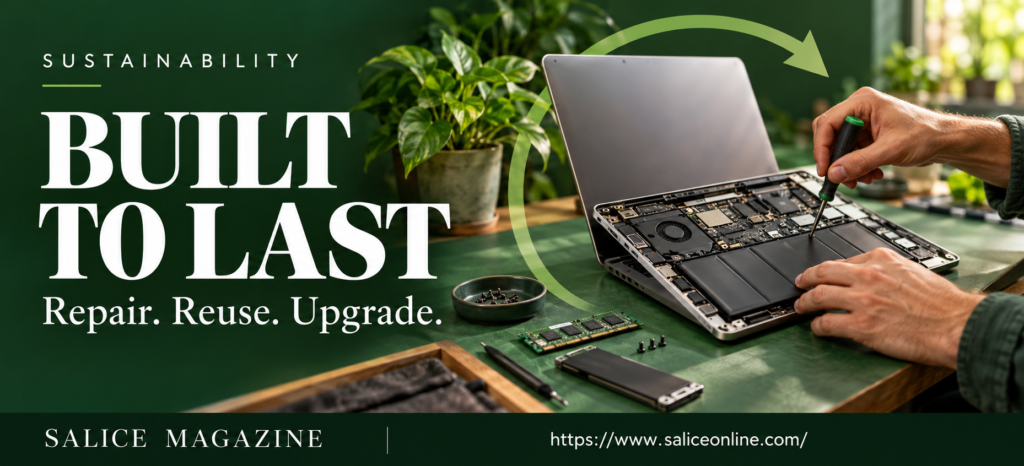
Modular design separates a product into components that people can repair or upgrade individually. A damaged screen need not take a working processor into retirement. A slower processor need not force an owner to discard a good enclosure, keyboard, and display.
Framework offers a practical example. Its laptop designs support component replacement, and the company publishes repair guides and sells parts through its marketplace. Its Laptop 13 mainboard can also operate outside the original laptop, creating opportunities to reuse an older board as another computer.
This approach changes the relationship between improvement and disposal. Customers can address a particular limitation instead of purchasing an entirely new machine. However, manufacturers must maintain compatible interfaces and available parts. Modularity offers little comfort if the next generation abandons the connections that earlier customers depend on.
Engineers must also manage the compromises. Extra connectors and protective housings can add weight, cost, and material. Removable components may complicate sealing against water or dust. A good modular product therefore needs careful judgement about which parts commonly fail or become inadequate. Turning every component into a module can create unnecessary complexity without extending useful life.
An Upgrade Without a New Laptop
Consider a hypothetical design consultant who owns a modular laptop. After several years, the battery weakens and her projects demand more memory. She replaces the battery and adds memory while keeping the rest of the computer.
Later, a substantial change in her workload might justify a mainboard upgrade. The older board could then run a small home server rather than enter a storage cupboard. Framework explicitly supports such reuse, although owners still need suitable accessories and technical confidence.
This example illustrates a possibility, not a measured environmental saving. Manufacturing replacement modules still consumes resources. The benefit depends on whether those modules postpone a complete purchase and whether someone continues using the older components. Replacing parts simply because a newer version exists can recreate the same consumption pattern in smaller pieces.
Software Can Extend Life or End It
Hardware durability cannot solve a software problem. A phone may still make calls and take photographs when its manufacturer stops providing security updates. An employer may then remove it from company systems because continued use creates unacceptable risk.
Fairphone connects physical repair with software longevity. The company committed to at least eight years of software support for the Fairphone 5, including five major Android updates. That commitment shows why support belongs inside the product proposition rather than behind a vague promise about durability.
Developers also need to consider older hardware when they release updates. Larger applications and unnecessary background processes can make a capable device feel obsolete. Manufacturers should explain support periods before purchase, maintain essential functions, and give customers clear transition options when support eventually ends.
The Business Problem Nobody Can Ignore
Longer product life creates an uncomfortable commercial question. What happens when a company succeeds so well that customers stop buying replacements as often?
Many businesses organise factories, sales targets, and investor expectations around regular replacement cycles. Engineers may propose a product that lasts ten years while commercial plans assume another sale after four. Unless leadership resolves that conflict, environmental ambitions will struggle against financial incentives.
A longer relationship with customers could create revenue through repairs, useful upgrades, refurbishment, and maintenance. Manufacturers could serve additional buyers with restored products while retaining trust among existing owners. But these activities do not automatically replace the profit from new sales. Leaders must test margins, service costs, and demand. They also need to avoid presenting every commercial benefit as an environmental achievement.
Procurement teams can help establish demand for a different approach. Instead of comparing purchase prices alone, they can evaluate repair costs, support commitments, energy use, and expected service years. A supplier that offers an attractive discount today may create higher expenses later. Buyers should ask who will provide parts and security support after the sales team completes its work.
Reward Useful Service Rather Than Frequent Replacement
Businesses can explore contracts that charge for reliable service instead of transferring equipment ownership once. An equipment provider might maintain machinery, recover it after use, and refurbish it for another customer. When the provider bears repair costs, durable components can improve its economics.
The contract determines whether that incentive works. A leasing arrangement that replaces functional equipment every two years may encourage more consumption. A subscription that locks customers out of basic functions can also turn longevity into dependence.
A credible model should make continued use attractive for both parties. Customers need transparent charges, reasonable access to repairs, and confidence that essential functions will survive a commercial disagreement. Providers need a financial reason to keep equipment useful. Ownership models alone cannot guarantee either outcome.
Keeping Everything Forever Is Not the Goal
Some replacements make environmental sense. An inefficient appliance may consume enough electricity or water to justify a newer model. Safety problems can also outweigh the case for repair. Businesses should compare continued operation, repair, and replacement across the product lifecycle rather than apply a blanket rule.
The European Environment Agency highlights this distinction when examining electronics and household appliances. Manufacturing and use contribute different shares of environmental impact across products. A sensible decision therefore considers the particular device, its condition, and how the owner uses it.
Companies should measure years of active service, successful repairs, spare part availability, and actual reuse. They should also disclose what happens to returned equipment. Collecting old products does not prove that another customer uses them. Evidence must follow the product beyond the collection box.
Customer habits matter as well. Advertising often links ownership of the newest model with competence, status, or personal progress. Manufacturers that promote longevity need to give repair and refurbishment comparable visibility. They can show customers what an upgrade achieves, explain when no upgrade makes sense, and celebrate continued use without suggesting that owners must accept poor performance.
Conclusion
The most sustainable product might already belong to us. Keeping it useful requires accessible repairs, compatible components, affordable parts, and continued software support. Manufacturers also need commercial incentives that make longer ownership worth supporting.
Framework illustrates this approach through laptops that owners can repair and upgrade. Customers can replace a mainboard while keeping other working components, and reuse the older board as another computer. That design does not eliminate environmental impacts, but it creates opportunities to avoid unnecessary replacement.
The next challenge reaches beyond the workshop. Companies must earn customer trust and enough revenue to sustain these commitments. Progress should include products that improve through care and selective upgrades, rather than demand a fresh purchase whenever one component falls short.
Sources
European Environment Agency
Europe’s consumption in a circular economy
https://www.eea.europa.eu/en/analysis/publications/europes-consumption-in-a-circular-economy-the-benefits-of-longer-lasting-electronics
Framework
Reduce Reuse Repair Recycle
https://frame.work/blog/reduce-reuse-repair-recycle
Framework
The Upgradeable Mainboard
https://frame.work/blog/the-upgradeable-mainboard
Fairphone
Software longevity
https://www.fairphone.com/software-longevity