- Staff Editor
- Follow Me
- September 14, 2026
-
The automotive industry over the next decade roughly 2026 to 2036 will undergo a deeper transformation than simply replacing internal combustion engines with batteries. The vehicle is becoming an electrified, software defined, AI enabled and increasingly autonomous computing platform. At the same time, manufacturing, R&D, supply chains and OEM business models will change substantially. The Industry will evolve along following major dimensions according to the industry trends and research.
Electrification Will Progress at Different Speeds Across Regions
Electrification will continue to reshape the global automotive industry, but adoption will not happen at the same speed everywhere. Each region has different government policies, charging infrastructure, energy costs, consumer preferences, vehicle prices and manufacturing capabilities.
China is likely to remain the fastest moving EV market because of strong domestic battery production, competitive vehicle pricing and a large charging network. Europe will continue its transition through strict emission regulations and growing investment in electric mobility. North America will move forward more gradually because of longer driving distances, infrastructure gaps and changing policy priorities. Hybrids are therefore likely to remain important for many consumers during the transition.
Emerging markets may follow a different path. High vehicle costs, limited charging infrastructure and electricity availability can slow battery electric vehicle adoption. Smaller electric vehicles, two wheelers and commercial fleets may electrify faster in some countries.
Automakers will therefore need flexible powertrain strategies rather than relying on one global solution. Battery electric vehicles, hybrids and efficient combustion vehicles may coexist for several years. The winners will be manufacturers that can adapt their technology, pricing and product portfolios to the needs of each regional market.
Software Defined Vehicles Will Become the Dominant Vehicle Architecture
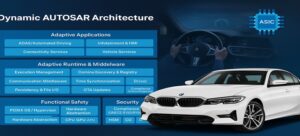
Software defined vehicles are changing how automakers design, build and improve vehicles. Traditional vehicles often rely on a large number of separate electronic control units, with each unit responsible for a specific function. This approach increases complexity, wiring, cost and integration effort.
The industry is now moving toward domain, centralized and zonal electrical and electronic architectures. These designs consolidate computing functions into fewer powerful controllers and organize vehicle systems more efficiently. This can reduce hardware complexity while creating a stronger foundation for software driven features.
A major advantage is that vehicle functions can be updated through over the air software. Automakers can improve performance, add features, fix software issues and enhance customer experiences without requiring a dealership visit.
Software defined architectures also support faster development because software teams can work more independently from hardware cycles. This is especially important for infotainment, ADAS, connectivity, energy management and personalized digital services.
McKinsey estimates that domain and zonal architectures could represent more than three quarters of automotive electrical and electronic architecture production by 2035. This shift will make software capability a major source of competitive advantage for automakers.
AI Will Become Embedded Across the Complete Automotive Lifecycle
Artificial intelligence will influence almost every stage of the automotive lifecycle during the next decade. Its role will extend far beyond voice assistants and intelligent features inside the vehicle. Automotive OEMs will increasingly use enterprise AI across research, engineering, manufacturing, sales and aftersales operations.
During vehicle development, AI can help engineers analyze requirements, generate design alternatives and accelerate complex simulations. It can support software development by assisting with coding, defect detection and automated testing. In battery engineering, AI can improve material selection, charging strategies and health prediction.
AI will also become more important in manufacturing. Computer vision can inspect parts and assemblies, while predictive analytics can identify equipment problems before failures occur. Quality teams can use AI to detect patterns across production and warranty data and identify potential issues earlier.
After vehicles enter the market, connected vehicle data can help manufacturers understand performance, predict maintenance requirements and continuously improve future products.
The biggest change is that AI will connect previously separate stages of the vehicle lifecycle. It will help OEMs move toward faster development, earlier problem detection and more data driven engineering decisions while keeping human judgment central to safety and accountability.
Vehicle R&D Will Move From Physical First Toward Virtual First Engineering
Vehicle development is increasingly shifting from a physical first approach to a virtual first engineering model. In the traditional process, engineers often depend on physical prototypes to discover design problems, validate performance and refine vehicle systems. This approach is effective, but it can be expensive and time consuming.
Virtual engineering allows more of this work to happen before a prototype is built. Digital twins, simulation, software in the loop, hardware in the loop and AI based surrogate models can help engineers evaluate many design alternatives much earlier in the development process.
This can improve decisions in areas such as crash performance, aerodynamics, thermal management, vehicle dynamics, software behavior and ADAS validation. Synthetic environments can also help test situations that are difficult, costly or unsafe to reproduce physically.
Physical testing will continue to be essential for safety, certification and final validation. However, its role will increasingly shift toward confirming designs that have already been extensively evaluated in virtual environments.
This change can reduce prototype costs, shorten development cycles, improve test coverage and allow engineering teams to identify problems much earlier in the vehicle development process.
ADAS Will Become Mainstream While Full Autonomy Progresses More Selectively
Advanced driver assistance systems will become increasingly common across vehicle segments during the next decade. Features such as adaptive cruise control, lane keeping, automatic emergency braking, highway assistance and automated parking will move from premium vehicles into more mainstream models.
Level 2 and Level 2 Plus systems are expected to become the dominant form of automated driving because they improve safety and convenience while keeping the driver responsible for supervision. McKinsey estimates that Level 2 systems could represent around 52 percent of new vehicle sales by 2030. Level 3 systems, which allow the vehicle to take greater control under specific conditions, may reach about 16 percent by 2035.
Level 4 autonomy will advance more slowly because it requires stronger sensing, computing, validation, regulation and infrastructure support. Its early growth is therefore likely to focus on controlled operating areas such as robotaxi services, logistics routes and selected urban zones.
The industry will not move directly from driver assistance to universal self driving. The more realistic path is gradual expansion, with assisted driving becoming standard while higher levels of autonomy grow selectively where technology, regulation and operating conditions can support them.
Battery Technology Will Become a Major Competitive Differentiator
Battery technology will become one of the most important areas of competition in the automotive industry. Automakers will not rely on a single battery chemistry for every vehicle. Instead, they will select different technologies based on vehicle segment, cost, range, safety, charging performance and regional supply conditions.
LFP batteries are likely to remain attractive for affordable and high volume vehicles because of their lower cost, strong safety and long cycle life. High nickel chemistries such as NMC and NCA will continue to support vehicles that require higher energy density and longer driving range. Emerging technologies such as sodium ion and solid state batteries may gradually enter selected applications as performance and manufacturing maturity improve.
Global battery demand will also increase significantly as electric vehicle adoption expands. EV battery deployment could rise from about 1.2 TWh in 2025 to roughly 4 to 5 TWh by 2035.
At the same time, charging technology will improve. Ultra fast charging, higher voltage vehicle architectures and smarter battery management will reduce charging time and improve efficiency. Vehicle to grid technology may eventually allow EVs to support electricity networks, making the battery an important part of both the vehicle and the energy ecosystem.
The Automotive Value Chain Will Be Reorganized
The automotive value chain will change significantly over the next decade as software, electronics, batteries and artificial intelligence become more important to vehicle performance and customer experience. Traditional boundaries between automakers, suppliers and technology companies will continue to become less clear.
OEMs will work more closely with semiconductor companies, cloud providers, AI developers and software firms as vehicles rely on advanced computing platforms and connected services. At the same time, Tier 1 suppliers will need to expand beyond traditional mechanical systems and strengthen capabilities in software, electronics, ADAS, cybersecurity and digital engineering.
This shift will also change where value is created. McKinsey estimates that the automotive software and electronics market could reach about 519 billion dollars by 2035. Growth in these areas is expected to outpace overall vehicle production.
Suppliers that depend heavily on internal combustion engine components may face increasing pressure as electric vehicle adoption grows. In contrast, companies involved in batteries, high performance computing, sensors, software platforms and advanced electrical and electronic architectures are likely to gain importance.
The future automotive ecosystem will therefore be more connected, collaborative and technology driven, with competitive advantage increasingly shared across a broader network of specialized companies.
What Will the Vehicle of 2035 Look Like?
The vehicle of 2035 will be far more intelligent, connected and adaptable than most vehicles on the road today. Many vehicles will be electrified and built around centralized computing platforms that manage multiple functions through software. Instead of leaving the factory with a fixed set of capabilities, vehicles will continue to evolve through software updates during their operating life.
Artificial intelligence will play a larger role in navigation, driver assistance, energy management, personalization, maintenance and the overall in vehicle experience. Vehicles will also communicate more closely with smartphones, cloud platforms, charging networks and digital services.
However, the global market will remain diverse. Battery electric vehicles will grow strongly, but hybrids and some internal combustion vehicles will continue in many regions. Adoption will depend on charging infrastructure, regulations, energy prices, affordability and customer needs.
Autonomous driving will also develop gradually. Robotaxis, commercial fleets and controlled operating environments may adopt higher levels of automation faster than privately owned vehicles.
The vehicle of 2035 will therefore not be defined by one technology. It will be a flexible digital platform that combines electrification, software, connectivity, AI and increasingly advanced automation.