
- Staff Editor
- Follow Me
- December 22, 2025
-
The global industrial system has traditionally followed a linear model of production say extract raw materials, manufacture products, and dispose of them after use. While this model fueled economic growth for decades, it has also led to resource depletion, waste generation, and environmental degradation. In response, industries and policymakers are increasingly turning toward the concept of a circular economy, a system that aims to eliminate waste and keep materials in continuous use through reuse, refurbishment, recycling, and remanufacturing.
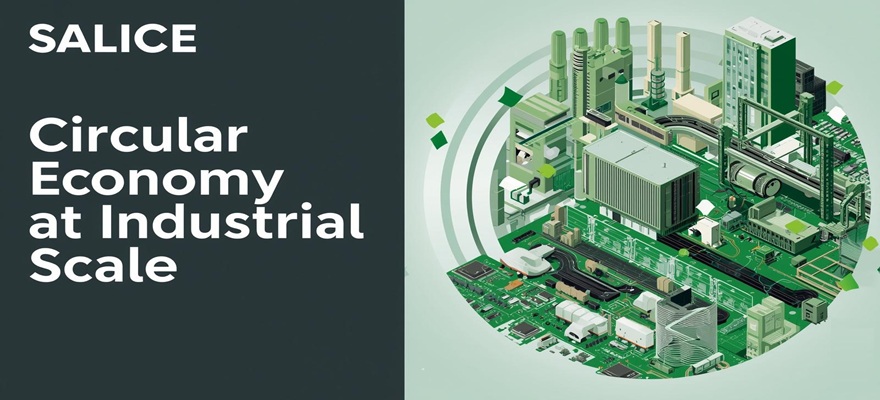
At an industrial scale, circular economy principles are transforming how companies design products, manage supply chains, and create long-term value. Rather than viewing waste as an unavoidable byproduct, circular systems treat waste as a resource that can be reintegrated into production cycles.
Economic Potential of Circular Industrial Systems
The circular economy is not only an environmental strategy but also a major economic opportunity. According to market estimates, the global circular economy market is projected to grow from approximately $656 billion in 2024 to over $2.6 trillion by 2035.
This growth is driven by several factors:
• Increasing resource scarcity
• Rising environmental regulations
• Corporate sustainability commitments
• Consumer demand for responsible production
Companies adopting circular models can reduce material costs, mitigate supply chain risks, and unlock new revenue streams through services such as product leasing, refurbishment, and recycling.
Understanding the Circular Economy Model
The circular economy represents a fundamental shift from the traditional “take–make–waste” model toward a regenerative system of production and consumption. In this model, products and materials remain in circulation for as long as possible through maintenance, reuse, repair, refurbishment, and recycling.
Three core principles underpin the circular economy:
- Eliminating waste and pollution through better design
- Keeping materials and products in continuous use
- Regenerating natural systems
For industries, this means redesigning manufacturing processes so that materials, energy, and products circulate within closed loops rather than leaving the system as waste.
Key Industrial Transformation Levers
Product Design for Circularity
The first step toward industrial circularity begins at the design stage. Manufacturers increasingly design products to last longer, be easily repairable, and be recyclable at the end of their lifecycle. This approach reduces material consumption and extends product lifetimes. Designing for modularity where components can be replaced rather than entire products discarded is becoming a major strategy in electronics, automotive manufacturing, and heavy equipment industries
Closed-Loop Supply Chains
Industrial scale circular systems depend heavily on closed loop supply chains. In such systems, materials recovered from used products are returned to production cycles. This approach reduces the need for new raw materials while minimizing environmental impact. It also improves supply security by allowing companies to reuse critical materials instead of relying solely on resource extraction.
Digital Technologies Enabling Circularity
Emerging technologies are playing a crucial role in enabling circular manufacturing.
Examples include:
• Digital product passports that track materials throughout their lifecycle
• IoT sensors to monitor product usage and maintenance needs
• Artificial intelligence to optimize resource recovery and recycling processes
• Digital twins to simulate product lifecycle efficiency
These technologies allow industries to manage material flows more effectively and improve resource productivity.
Remanufacturing and Refurbishment
Another important component of industrial circularity is remanufacturing, where used products are restored to like-new condition.
Industries such as aerospace, automotive, and heavy machinery increasingly refurbish components such as engines, gearboxes, and electronics. This process significantly reduces energy consumption and raw material demand compared with producing new components.
Industrial Symbiosis
Industrial symbiosis refers to collaboration between companies where one company’s waste becomes another company’s input.
For example, excess heat from one industrial facility can be used by nearby facilities, while byproducts such as scrap metals, plastics, or chemicals can become feedstock for other manufacturing processes. Such collaborations create interconnected industrial ecosystems that maximize resource efficiency.
Potential Real-World Example: Circular Battery Ecosystems
One compelling example of industrial circularity can be seen in the electric vehicle (EV) battery ecosystem. Companies are developing advanced recycling systems to recover valuable materials such as lithium, nickel, and cobalt from used batteries.
For instance, companies like Redwood Materials are building large scale battery recycling facilities capable of recovering up to 98% of critical minerals from used lithium-ion batteries and reintroducing them into new battery production.
Similarly, automotive manufacturers are developing direct recycling technologies that dismantle battery components and reuse the recovered materials in new manufacturing processes, reducing energy consumption and resource extraction.
Challenges to Scaling Circular Economy in Industry
Despite its potential, scaling circular economy models across global industries presents several challenges:
- Infrastructure limitations
Recycling and remanufacturing systems require significant investments in infrastructure and logistics networks. - Complex supply chains
Modern global supply chains involve numerous stakeholders, making material tracking and recovery difficult. - Product design constraints
Many existing products were not designed with recyclability or modular repair in mind. - Economic barriers
In some cases, producing new materials remains cheaper than recycling them, limiting adoption.
Addressing these challenges will require coordinated efforts from governments, industries, and research institutions.
Conclusion
The transition toward a circular economy at industrial scale represents one of the most important transformations in modern manufacturing. By shifting from linear production systems to closed-loop resource cycles, industries can reduce waste, improve supply resilience, and significantly lower environmental impact. Technological innovation, regulatory support, and strategic collaboration between companies will be critical in enabling this transition. As industries increasingly recognize that sustainability and profitability can coexist, the circular economy will likely become a defining model for industrial development over the next several decades.
Ultimately, the success of circular manufacturing will depend on how effectively businesses redesign products, digitize supply chains, and build ecosystems where resources remain in circulation rather than becoming waste.